
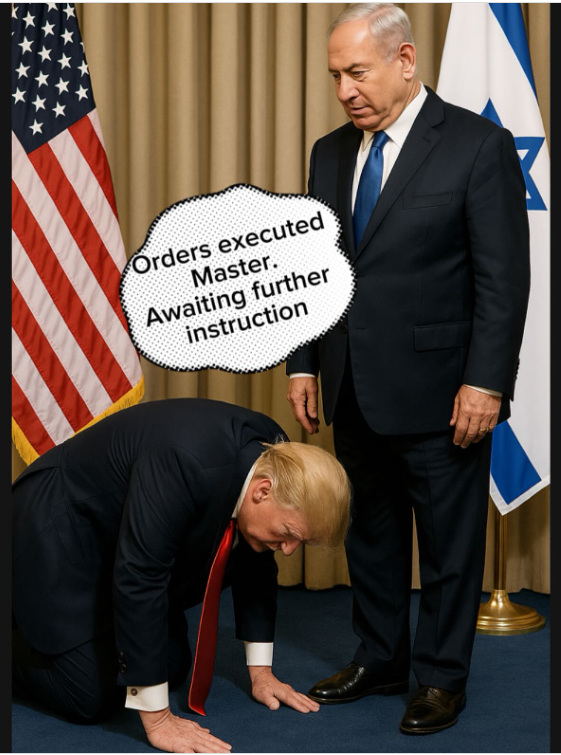
Donald Trump and Benjamin Netanyahu stand at the center of devastating cycles of violence
Donald Trump and Benjamin Netanyahu stand at the center of some of the most devastating cycles of violence in recent history. Their decisions, their rhetoric, and their political strategies have not merely influenced events—they have helped shape a reality in which war becomes normalized and human life is treated as expendable.
Let us speak plainly: the consequences of their leadership are written in the blood of civilians.
Under policies associated with Netanyahu, the devastation in Palestine has reached catastrophic levels. Entire neighborhoods reduced to rubble, children pulled from the debris, families erased in moments—this is not abstract geopolitics; it is human tragedy on a massive scale. The continued expansion of occupation and the relentless use of military force have entrenched a system that critics across the world describe as fundamentally unjust and incompatible with international law.
Trump, meanwhile, pursued a confrontational and destabilizing approach to the Middle East, escalating tensions with Iran and contributing to an environment where war seemed not a last resort, but a tool of policy. His decisions risked dragging the entire region into wider conflict—placing millions of lives in jeopardy and pushing global stability to the brink.
Both Trump and Netanyahu have been repeatedly accused—by legal experts, human rights organizations, and international observers—of actions that may constitute war crimes. Whether in the bombardment of densely populated areas or the endorsement of aggressive military strategies, the pattern is deeply alarming. Even the discussion of such allegations at international courts reflects the gravity of the situation.
And yet, the devastation does not end on the battlefield. The targeting of individuals, including scientists, has raised profound ethical questions about the erosion of boundaries that once governed conflict. When such actions become normalized, the world moves closer to a state where no one is truly safe.
Their policies have also had a corrosive effect beyond the region. By fueling conflict, Trump and Netanyahu have contributed to global economic instability—disrupting markets, increasing insecurity, and drawing other nations, including Arab states, into escalating tensions. War, once ignited, does not remain contained; it spreads, and its costs are paid globally.
Equally troubling is what many see as a disregard for international norms. Statements and actions associated with both men have been widely criticized as dismissive of international law, as though rules designed to protect humanity are obstacles rather than obligations. This perception of impunity—of power operating without accountability—undermines the very foundation of global order.
In Trump’s case, the shadow of his past association with Jeffrey Epstein continues to raise serious concerns. While no criminal wrongdoing has been legally established against him in that matter, the persistence of the issue in public discourse reflects broader anxieties about judgment, responsibility, and the ethical standards expected of those in power.
This is not merely a political disagreement. It is a moral reckoning.
When leaders’ decisions are linked to widespread civilian suffering—when children, women, and ordinary families bear the cost—silence becomes complicity. Trump and Netanyahu are not passive figures in these events; they are central actors whose choices have had profound human consequences.
The world cannot afford to look away. Because every escalation, every act of violence, every life lost adds to a ledger that history will not ignore.
And in that ledger, the question will not be what power they held—but what they chose to do with it.